The Myth of Keeping in Touch by Willpower Alone
Keeping in touch need not depend on memory alone. Choose a personal prompt that makes reaching out easier to remember, begin and sustain.

The common mistake with keeping in touch is treating every missed call as proof you should try harder. That can turn a kind intention into a small, nagging obligation; a recurring prompt for keeping in touch gives the intention somewhere to land.
Willpower is useful for making a choice, but it is a poor diary. A familiar cue—a note beside the kettle, a reminder on your phone or a regular radio programme—can bring someone to mind without requiring you to remember the plan from scratch. The point is not to contact everyone on a rigid timetable. It is to make a few valued connections easier to tend.
Why is keeping in touch hard to remember?
Because everyday life is full of interruptions, even when your days look quiet from the outside. A message you mean to send can be displaced by an appointment, a parcel delivery or the ordinary business of making lunch.
There is also a difference between remembering a person and remembering to act. You may think warmly of an old friend while gardening, then reach the end of the day without opening your phone. That gap is not a measure of how much the friendship matters; it is a cue to put the intention somewhere visible.
What makes a recurring prompt useful?
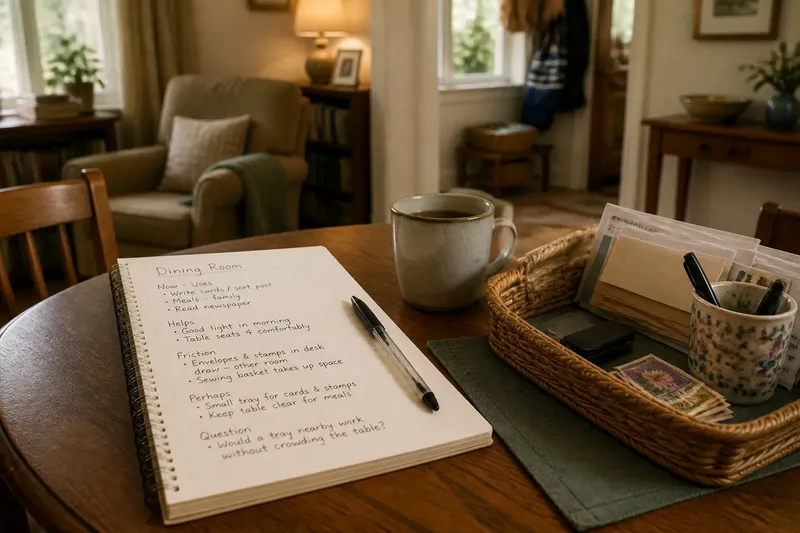
A useful prompt is easy to notice and already fits somewhere in your day. It might be a paper card tucked by your address book, a recurring phone alert or a prompt linked to something you do regularly, such as making tea on a particular morning.
Choose a cue that points towards a small action, not a vague demand to “be better at calling”. You could write “send Jo a photo of the garden” or “ask Ben how the move went”. A specific reminder makes it clearer what to do and lowers the effort of starting.
Keep the system light. One reminder can hold a short list of people or a single name that changes from time to time. If the cue becomes a source of guilt, move it, soften its wording or make the intended action smaller.
Which prompt suits a call, a card or a message?
Match the prompt to the way you and the other person naturally communicate. A text suits a quick greeting or a photograph; a phone call gives room for a longer conversation; a card may feel right for someone who enjoys post and does not check messages often.
- Phone calendar: Choose a reminder you can snooze or reschedule if the day is busy.
- Paper note: Place it beside an item you already use, such as your address book or reading glasses.
- Wall calendar: Add a brief name or action, rather than writing a long explanation that is hard to scan.
- Shared household calendar: Use it only if other people seeing the reminder feels comfortable.
Check that the prompt is private enough for you, especially on a shared screen or in a communal room. Phone features and reminder settings differ, so follow the device maker’s instructions if you need help changing them.
How often should you reach out?
Often enough to feel natural, not so often that contact becomes a duty. There is no ideal interval that suits every friendship: one person may enjoy a brief note, while another prefers a proper conversation when both of you have time.
Let the relationship guide the rhythm. If you are unsure, ask plainly: “Would you rather I call now and then, or send a message?” Their answer can help you choose a prompt that fits both your habits and theirs.
Say you would like to reconnect with an old neighbour but keep putting it off. You could add “send Pat a message asking about the allotment” to a paper note beside your address book after your regular Saturday breakfast. When you see it, send a short message; if Pat replies, you can take the conversation at a pace that suits you both.
What if a reminder starts to feel like pressure?
Change the reminder rather than scolding yourself. A missed prompt may mean you were tired, occupied or simply not in the mood; it does not require you to make up for it with a long call later.
Make the next action smaller: send a warm greeting, leave a voice message or postpone the reminder to a calmer day. If a particular relationship feels strained, you can choose not to contact that person for now. A prompt should support a connection you want, not override your judgement.
How can you keep it considerate?
Make room for the other person’s preferences and capacity. A message that says “No need to reply today” can be kinder than a question that seems to demand an immediate answer, especially if you know someone is busy or dealing with a difficult stretch.
Think about accessibility, too. Someone who finds small text uncomfortable may prefer a call; someone who has trouble hearing on the phone may welcome messages. Ask rather than guessing, and be willing to adjust the way you get in touch.
What should you do when the prompt appears?
Choose an action small enough to do at that moment, then let the response unfold naturally. You might write two sentences, leave a short message or set aside a quieter time for a proper conversation. The prompt opens the door; it does not have to produce a long exchange.
What is not worth the effort is building an elaborate tracking system with boxes to tick for every contact. If you enjoy a notebook, use one, but there is no need to record every reply or judge the closeness of a friendship by a log.
Keeping in touch is easier to sustain when it rests on a cue you chose, rather than on perfect recall. Pick one recurring prompt for keeping in touch, attach it to a realistic moment and make its suggested action gentle. That small adjustment leaves more room for the part that matters: a genuine exchange between two people.