A Room-by-Room Inventory That Starts with Use
A room-by-room inventory that starts with use helps you see what each space supports before deciding which belongings or arrangements deserve attention.
The common mistake with a room-by-room inventory is starting with the cupboards. It can turn a useful review into a long sorting job, while the real question—what do you need this room to do?—remains unanswered. Begin by noticing how you use the space, and you can make better-informed decisions about its contents and arrangement.
This approach is especially helpful when routines or priorities are changing. You are not trying to make every room look different; you are recording what happens there now, what gets in the way and what you may want the space to support next.
What should you prepare before you begin?
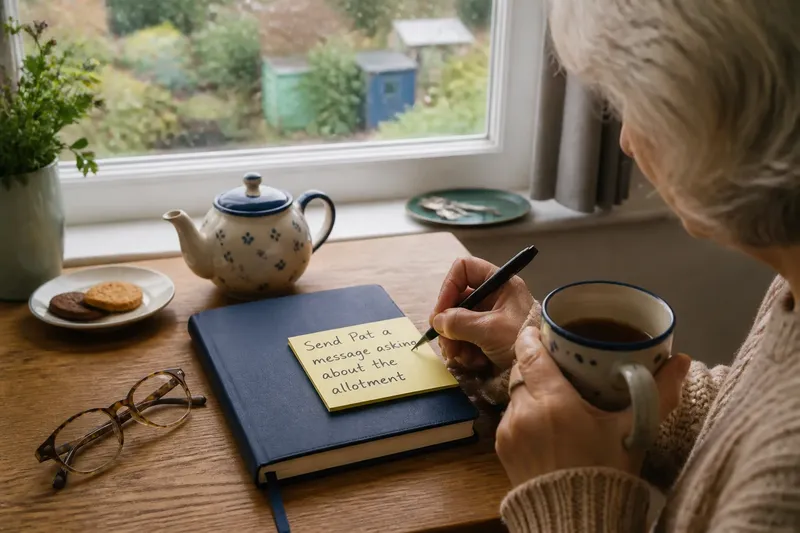
Choose a notebook, a clipboard or a simple document on your phone. Set aside a page for each room, with space for the room’s current uses, useful features, obstacles and questions to revisit. A rough sketch is optional; clear notes matter more than a polished floor plan.
Pick a time when you can look around without rushing from one task to another. You do not need to empty drawers, open every box or move furniture. Keep the first pass observational, and leave decisions about possessions for later.
Decide what counts as a room for your purposes. Include spaces used regularly, such as a kitchen, bedroom, bathroom, living room, hallway, laundry area or study. If a landing or corner serves a distinct purpose, give it a place in your notes too.
How do you make a room-by-room inventory based on use?
Work through the home in an order that feels natural, perhaps from the entrance through the main rooms and then to less-used spaces. In each room, pause before writing and consider what actually takes place there over an ordinary week. Include brief tasks and occasional activities, not only the room’s conventional purpose.
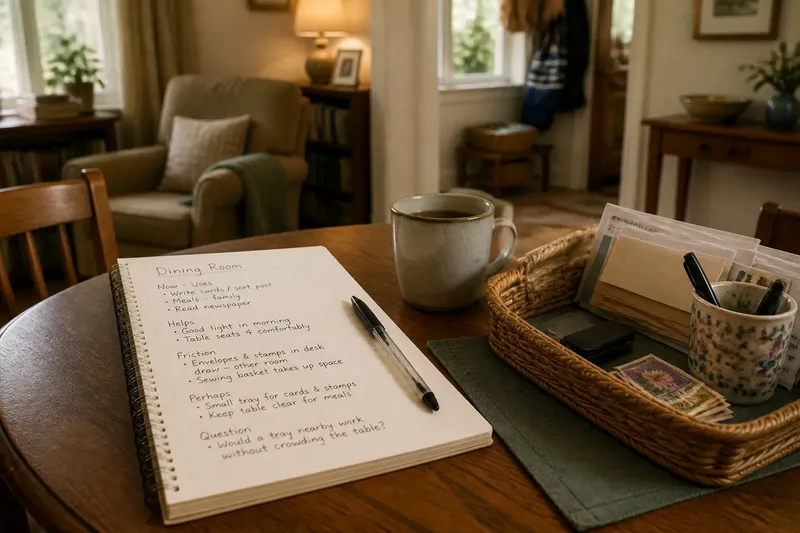
- Name the room and its present uses. Write down the activities you see or remember happening there, such as getting dressed, reading, sharing a meal, sorting post or speaking with a friend by phone.
- Notice when and who uses it. Record whether the room is used most mornings, during visits, for quiet time or only when a particular task comes up. Note who uses the space, including household members or visitors, without turning the page into a timetable.
- Mark what helps. Identify useful features in place: a clear surface for preparing food, a comfortable chair near a lamp, a shelf where frequently used items are easy to reach, or a clear route through the room.
- Record friction in plain language. Note what makes a routine awkward, such as having to carry supplies between rooms, moving a chair to reach a cupboard or searching for the item needed to start an activity.
- Separate observations from ideas. Put what you know under “now” and possibilities under “perhaps”. A room may support an activity more often in future, but that possibility is not yet a reason to rearrange everything.
Keep your wording specific. “The table is cluttered” is less informative than “I use the table to open post, but the sewing basket is left on the part I need.” The second note links a feature to a real use, which makes any later decision easier to assess.
What should you notice in each room?
In the kitchen, focus on the sequence of ordinary tasks: choosing ingredients, preparing food, eating and clearing away. Note whether the items used together are near one another and whether a counter or table has a regular purpose beyond holding things temporarily.
In a bedroom, record how the room supports getting ready, sleeping, dressing or taking a quiet break. Consider where clothes are set down, where everyday belongings are kept and whether the space also acts as a work area or storage room. A room can serve several purposes; write them all down before deciding which deserves more attention.
For a living room, notice whether people read, watch a programme, talk, pursue a hobby or simply rest there. Look at how the seating relates to the activity, where books or hobby materials are kept and whether a surface is available when needed. In a bathroom or hallway, pay attention to small transitions: getting ready to leave, returning home, or reaching for everyday toiletries.
Do not leave out spaces that seem to have no clear use. A spare room may hold seasonal belongings, provide a place for visitors or remain empty because nothing regularly calls for it. Recording the present reality is more helpful than describing what you think the room ought to be.
How can notes lead to a useful decision?
After the first pass, read each page and look for a connection between the activity and its setting. Ask whether the room supports the use you value, whether something makes that use awkward, and whether the issue is about an item, a location or the room’s competing purposes.
Then choose one small question to explore in each room, rather than making a list of everything that might change. For example, you could ask whether the reading chair has adequate light, whether the post has a consistent landing place or whether a hobby needs a more accessible surface. A question keeps the next action focused without committing you to a major change.
Say you notice that you often write birthday cards at the dining table, but envelopes and stamps are kept in a desk drawer in another room. You might note the activity, the repeated trip and the supplies involved, then consider whether a small tray could live nearby. The observable result to look for is whether you can sit down and begin the task with fewer interruptions; if the tray gets in the way of meals, that tells you the arrangement needs reconsidering.
Where a decision involves safety, access or a product’s suitability, use common sense and check relevant manufacturer instructions or local guidance; consult a qualified professional if the issue calls for specialist advice. For ordinary household choices, a reversible adjustment can help you see whether an arrangement fits before you make a larger commitment.
How often should you revisit the inventory?
There is no need to keep the notes current every day. Revisit a room when a routine changes, when an activity starts happening there more often, or when the space begins to feel difficult to use. Date your notes if that helps distinguish an old arrangement from the present one.
Keep earlier observations if they explain how a room’s purpose has shifted, but do not treat them as permanent instructions. A room that once supported a regular hobby may now be used for something else. Your inventory should describe the life you have, not preserve a past routine out of obligation.
It can also help to read the room pages together. The same activity might rely on more than one space, or an item may be stored far from where it is used. That broader view can reveal a practical question worth exploring, without turning the exercise into a whole-home renovation plan.
What questions help keep the inventory practical?
Should I list every item in the room?
No. Start with activities and the belongings or features that directly support them. A complete contents list can become tiring, and it may not tell you whether the room works well for the things you actually do.
What if a room has several uses?
Write down each use and note which ones happen regularly, occasionally or only when someone visits. You do not have to choose a single purpose before you understand how those activities share the space.
What if I cannot decide whether something belongs there?
Leave the question open and record where the item is used, if anywhere. You can return to it after looking at the room’s activities instead of making a decision just because you encountered the object.
Should I include a room that is rarely used?
Yes, but note how it is used now and what makes it occasional. An honest entry might show that the room serves visitors or stores items, or that it has no current role you want to preserve.
What is not worth the effort?
Do not aim for perfect descriptions, colour-coded diagrams or a count of every possession. Those details rarely improve the central record: what happens in a room, what supports it and what creates friction. If a note is clear enough to guide a later decision, it has done its job.
Nor is it useful to label a room as wasted because it is quiet or used infrequently. A space may be valuable precisely because it is available for a particular occasion or offers a place to be alone. Describe its role in your household before judging how often it “should” be used.
A room-by-room inventory that starts with use is most useful when it stays curious and specific. Begin with what each space supports, record what helps and what hinders, and let the notes point to one decision at a time. When you return to the inventory later, the main search phrase is a reminder of the method: look at how the room is lived in before deciding what to change.